











 30 Jul 2026
 Gem Mines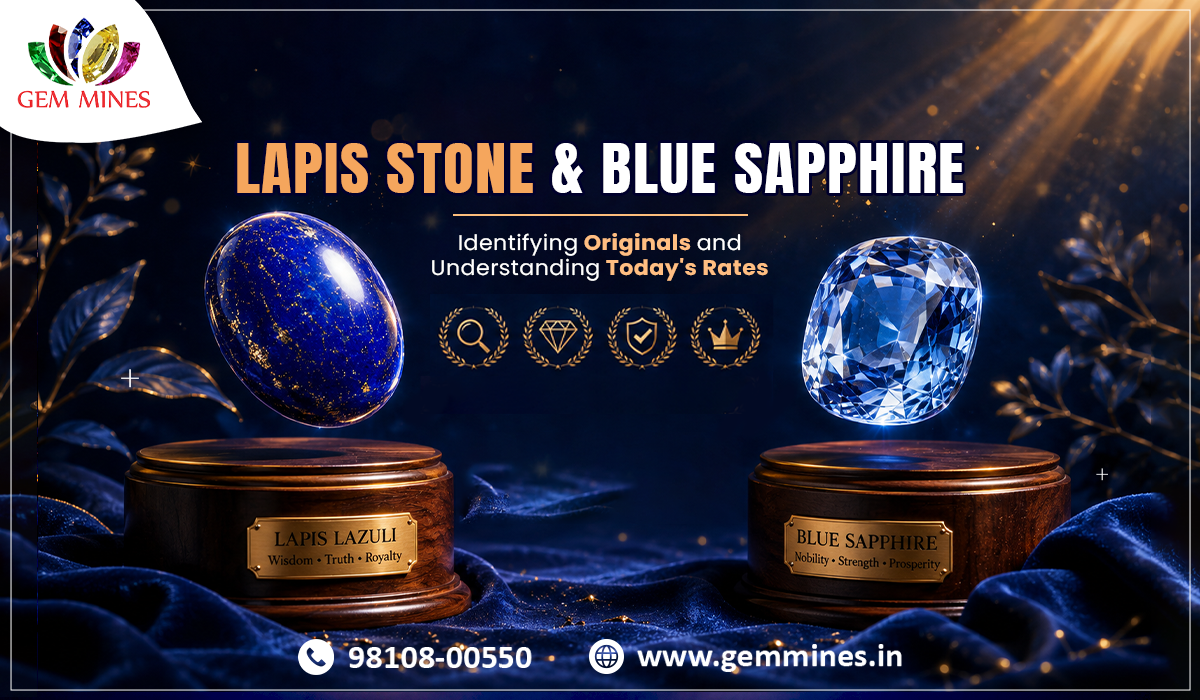
If you’re planning to buy a gemstone for its healing properties, astrological benefits, or simply for its beauty, two stones that come up again and again are Lapis Lazuli and Blue Sapphire. Both carry deep blue hues that have fascinated buyers for centuries, but both are also heavily faked in the market. Knowing how to identify an original Lapis Stone and understanding today’s Blue Sapphire rate can save you from an expensive mistake.
What Makes a Lapis Stone “Original”?
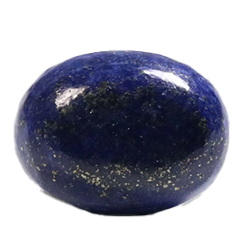
Natural Lapis Stone is a metamorphic rock, not a single mineral, which is exactly why so many buyers get confused when identifying it. Genuine Lapis Lazuli is composed mainly of lazurite, along with visible flecks of golden pyrite and white streaks of calcite. If a piece looks too uniform, too smooth, or too perfectly blue without any texture, that’s usually your first warning sign.
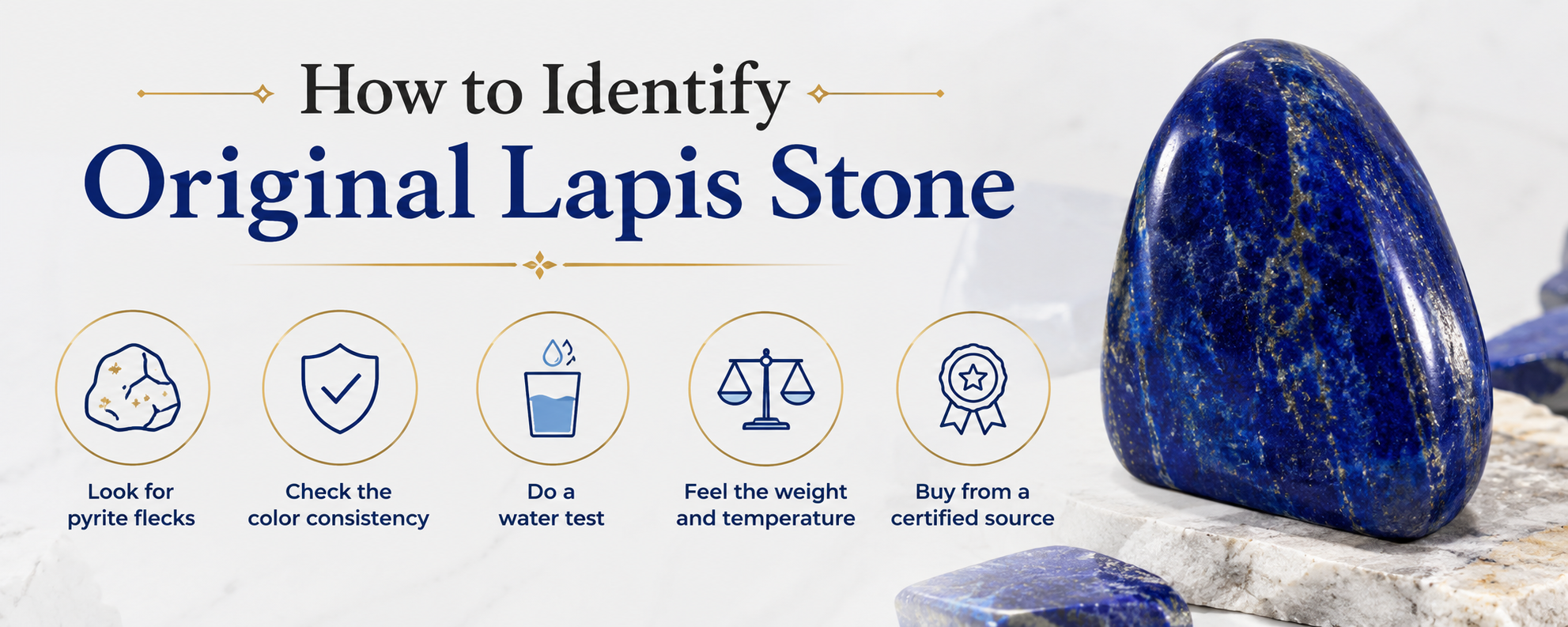
How to Identify Original Lapis Stone
Here are a few practical ways to check authenticity before you buy:
- Look for pyrite flecks – Natural Lapis Stone almost always has small golden or brassy specks scattered across its surface. Dyed howlite or synthetic glass imitations often lack this natural inclusion pattern, or fake it too evenly.
- Check the color consistency – Original Lapis Stone has a deep royal blue tone with natural variation. Perfectly even, flat blue color across the entire piece is a common sign of dye or synthetic material.
- Do a water test – Genuine Lapis Stone will not release color when rubbed with a damp cloth. Dyed imitations, especially dyed howlite, often leave a blue residue.
- Feel the weight and temperature – Natural Lapis Stone feels cool to the touch initially and has a slightly heavier, denser feel compared to plastic or resin imitations.
- Buy from a certified source – The simplest and safest way to identify original Lapis Stone is to buy from a seller who provides lab certification confirming it’s natural and untreated.
This is where Gem Mines becomes especially valuable. Every Lapis Stone sold at Gem Mines goes through proper certification, so you don’t have to rely only on visual checks — you get documented proof of authenticity along with your purchase.
Understanding Blue Sapphire Price and Rate Today
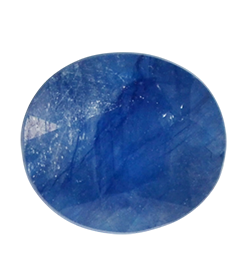
Blue Sapphire, known as Neelam in Vedic astrology, is one of the most powerful and fastest-acting gemstones — which also makes it one of the most commonly faked. Unlike Lapis Stone, Blue Sapphire pricing depends on a combination of very specific factors, which is why the Blue Sapphire rate today can vary dramatically from one stone to another.
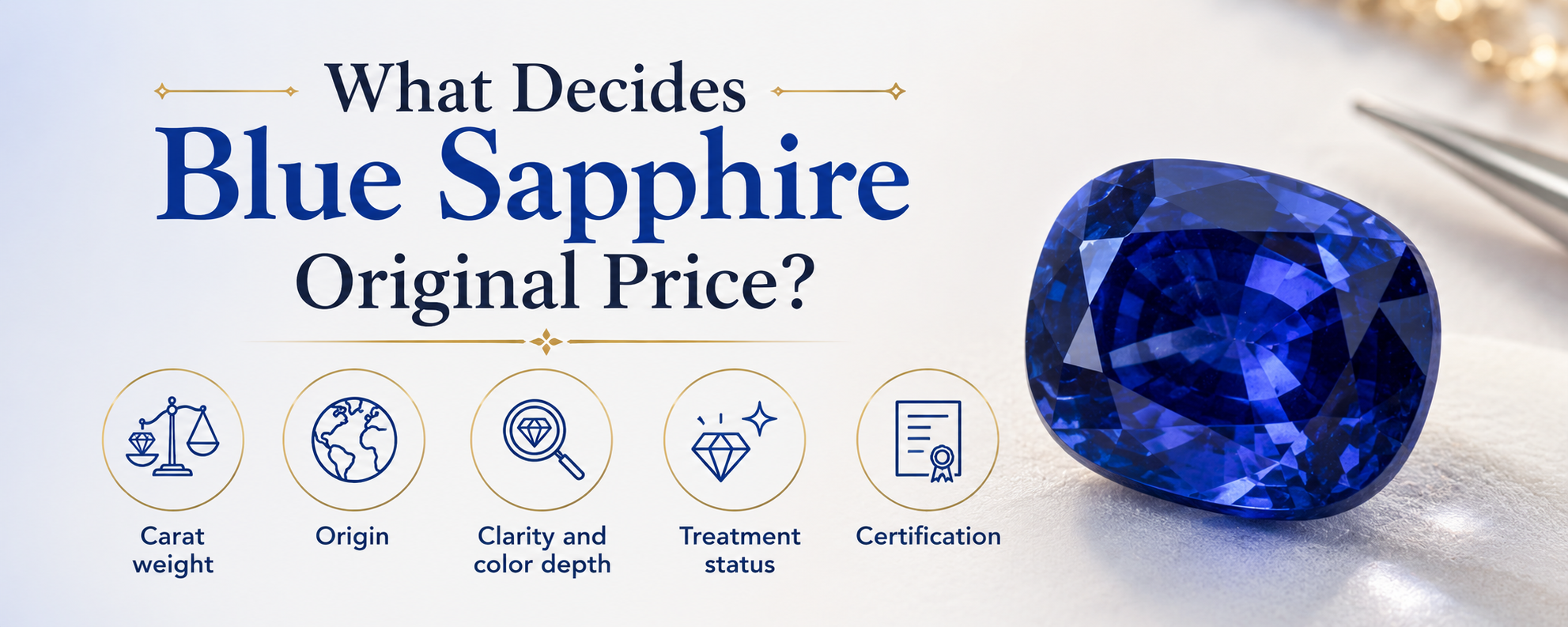
What Decides Blue Sapphire Original Price?
- Carat weight – Blue Sapphire price is quoted per carat, and the rate per carat increases as the stone size increases, not in a straight line but progressively.
- Origin – Ceylon (Sri Lankan) and Kashmir sapphires typically command a higher Blue Sapphire original price compared to other origins, due to their color quality and rarity.
- Clarity and color depth – A rich, even cornflower-blue sapphire with minimal inclusions will always cost more than a pale or heavily included stone.
- Treatment status – Unheated, natural Blue Sapphire commands a significantly higher price than heat-treated stones. Always ask whether the stone has been treated before checking the rate.
- Certification – A certified Blue Sapphire from a recognized gemological lab will always have a more transparent and trustworthy price compared to an uncertified stone claiming to be “original.”
Because so many variables affect Blue Sapphire price, checking the Blue Sapphire rate today without a certificate can be misleading. A stone may look impressive but hold little real value if it’s synthetic, treated, or misrepresented in weight.
Why Buying from a Certified Source Matters
Whether you’re purchasing a Lapis Stone for its calming, communication-boosting properties or a Blue Sapphire for its powerful Saturn-related astrological benefits, the single biggest factor in getting genuine value is buying from a certified and trustworthy source.
Gem Mines specializes in natural and certified gemstones, including both Lapis Stone and Blue Sapphire, sourced and verified for authenticity. Instead of guessing whether your stone is original based on home tests alone, Gem Mines provides certification that confirms what you’re paying for — real, natural stones at a fair and transparent price.
Final Thoughts
Both Lapis Stone and Blue Sapphire carry genuine value — spiritually, aesthetically, and financially — but only when they’re authentic. Learning how to identify original Lapis Stone through pyrite inclusions, color consistency, and simple home tests can help you avoid basic fakes. For Blue Sapphire, understanding what affects the original price and today’s rate ensures you’re not overpaying for a treated or synthetic stone.
When in doubt, choose a source that backs its stones with certification. With Gem Mines, you get access to natural, certified Lapis Stone and Blue Sapphire, so your purchase is backed by authenticity, not just appearance.